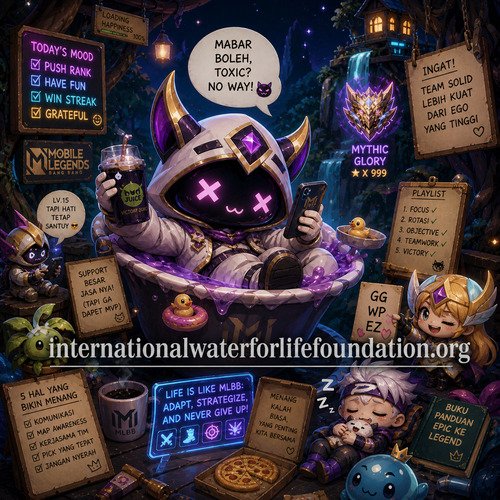
internationalwaterforlifefoundation.org – Mobile Legends: Bang Bang is a team-based game where individual skill is important, but teamwork often determines whether a strategy succeeds or fails. A player may have excellent mechanics, understand their hero perfectly, and perform well in their lane, yet the result of the match can still depend heavily on how five different players cooperate with each other. Every role has a different responsibility, and every decision made by one player can affect the entire team. A jungler choosing when to take objectives, a roamer deciding when to initiate, a mage controlling space, a marksman managing damage output, and an EXP laner creating pressure all contribute to the overall structure of the match. This is why communication and coordination are essential parts of advanced Mobile Legends gameplay. Communication does not always require constant conversation. Even simple information such as enemy locations, missing opponents, available abilities, and objective timing can significantly improve team decisions. Many matches are lost not because players lack mechanical ability but because they make separate decisions without considering what their teammates are doing. A player may start a fight without checking whether allies are close enough to help, or a team may chase an enemy too far without realizing that important abilities are unavailable. These situations often happen because there is a lack of shared understanding. Good teams create a common plan by recognizing what they want to achieve and how each player contributes to that goal. Team synergy also involves understanding different hero functions. A tank does not simply absorb damage; they create space and opportunities. A damage dealer does not only chase eliminations; they must survive long enough to provide consistent damage. A support hero does not only heal or protect; they influence the team’s ability to continue fighting. When players understand these responsibilities, cooperation becomes more natural. They stop focusing only on their own performance and begin thinking about how their actions affect the entire team. This mindset is especially important because Mobile Legends is a game of limited resources and constant decisions. A team that communicates effectively can recover from mistakes, create better rotations, secure objectives more safely, and execute strategies with greater confidence. By improving communication, role awareness, and decision-making, players can transform five individual heroes into a coordinated team that plays with a clear purpose.
Building Strong Team Communication During Matches
Communication in Mobile Legends is valuable because the battlefield changes constantly. Enemy positions, objective availability, cooldowns, and lane conditions can change within seconds. Players who share useful information give their teammates more time to react and make better decisions. However, effective communication is not about sending every possible message. Too much unnecessary information can create confusion. The most useful communication focuses on details that can immediately influence gameplay. For example, informing teammates that an enemy hero has disappeared from the map can prevent an unnecessary death. Mentioning that an important enemy ultimate has been used can create an opportunity for the team to engage. Alerting teammates about an upcoming objective can encourage better preparation. These simple messages can have a significant impact because they improve the team’s understanding of the current situation. Players should also learn to communicate before problems happen rather than only after something goes wrong. Warning teammates that an enemy may rotate toward a lane is more useful than complaining after a teammate has already been eliminated. Good communication is proactive. It helps the team avoid mistakes instead of only explaining them afterward. Timing is another important factor. Information should be delivered when it can still be used. A message about an enemy movement becomes less valuable if the danger has already arrived. Players should develop the habit of sharing information immediately when they notice something important. This creates a smoother flow of decision-making because teammates are not forced to discover everything independently. Communication also helps reduce misunderstandings. Many team conflicts happen because players assume that teammates understand their intentions. A jungler may plan to secure an objective while teammates expect a lane defense. A roamer may prepare an initiation while damage dealers are not ready to follow. Clear communication reduces these situations by creating shared expectations. Even when playing with unfamiliar teammates, simple and useful information can improve coordination. The goal is not to control every action but to provide enough awareness that everyone can make better choices.
Understanding Team Intentions Before Making Decisions
Many mistakes in Mobile Legends happen because players act individually without considering the team’s current intention. A player may see an enemy with low health and immediately chase, while the rest of the team is preparing a different objective. Another player may push a lane aggressively while teammates are gathering for a fight. These actions are not always caused by bad intentions. Often, they happen because different players are focused on different goals. Strong teamwork begins when players learn to recognize the team’s overall plan. Before making a major move, players should consider what the team is currently trying to accomplish. Is the team preparing an objective? Is the goal to defend a structure? Is the team trying to create pressure in another lane? Understanding this context helps players make decisions that support the larger strategy. This does not mean every player must follow one exact movement. Flexible decisions are still important. However, individual actions should generally contribute toward the team’s current priorities. Team intention is also connected to role responsibilities. A roamer may decide to create vision and pressure rather than immediately join a farming player. A jungler may delay a fight because securing an objective is more valuable. A marksman may avoid unnecessary movement because their main responsibility is maintaining damage output. These decisions make more sense when viewed from the perspective of the entire team. Players should also learn to adjust when the team’s situation changes. A strategy that was effective five minutes earlier may no longer be appropriate after losing an objective or falling behind in resources. Communication helps the team recognize these changes faster. When players understand each other’s intentions, they can coordinate movements more effectively and avoid situations where everyone is making individually reasonable but collectively harmful decisions. Team synergy is created when individual decisions connect into one larger plan.
Managing Disagreements and Maintaining Focus
Competitive games often create moments of frustration, especially when mistakes happen repeatedly or when teammates have different opinions about what should be done. However, emotional reactions can make teamwork more difficult. A player who focuses too much on blaming others may lose attention on the actual match. Mobile Legends requires constant decision-making, and losing focus can create even more problems. Strong teams learn to manage disagreements by focusing on solutions rather than assigning blame. If a teammate makes a mistake, the important question is what the team can do next. Can the team defend safely? Can resources be recovered elsewhere? Can the next objective become a better opportunity? This approach keeps attention on improvement rather than frustration. Players should also understand that mistakes are part of every match. Even experienced players can make incorrect decisions. What matters is how quickly the team adapts afterward. Communication becomes especially valuable during difficult situations because a calm team can still find opportunities even when behind. Another important aspect is respecting different roles. A player who does not understand another role’s responsibilities may incorrectly judge their decisions. For example, a roamer may appear inactive while actually creating vision or waiting for the right initiation moment. A jungler may avoid a fight because securing an objective provides greater value. Understanding these responsibilities creates more patience between teammates. Maintaining focus also means avoiding unnecessary arguments during important moments. The time spent blaming a teammate could instead be used to track enemy movement, prepare an objective, or protect a structure. A team does not need perfect agreement to succeed, but it does need enough cooperation to continue making useful decisions. Players who develop emotional control and solution-focused communication often perform better because they preserve their ability to think clearly throughout the match.
Creating Better Synergy Between Different Roles
One of the most important examples of team synergy in Mobile Legends is the relationship between frontline heroes and damage dealers. These roles depend on each other. A frontline hero creates space, absorbs pressure, and disrupts enemies, but their effectiveness depends on teammates being able to follow up. A damage dealer may have strong abilities and high damage potential, but without protection or proper positioning, they may never have the opportunity to contribute. Understanding this relationship helps players coordinate better during fights. Frontline players should know when to engage and when to wait. Starting a fight too early without support can leave them isolated. Waiting too long may allow the enemy to control the battlefield. The best initiation moments usually happen when teammates are close enough to provide follow-up and when enemy positions are vulnerable. Damage dealers, meanwhile, should understand that they do not always need to immediately attack the closest enemy. Their priority is often finding a safe position where they can continue dealing damage. This requires patience because the best target is not always the easiest target. A player who moves too aggressively may eliminate one enemy but become vulnerable afterward. Good synergy means each role understands what the others need. Frontline heroes create opportunities, while damage dealers convert those opportunities into meaningful pressure. Support heroes add another layer by protecting teammates, controlling fights, or providing additional utility. When these roles work together, the team becomes much stronger than five separate players acting independently. Players should therefore think beyond their own abilities. A tank’s success is partly measured by how well teammates can use the space created. A marksman’s success is partly influenced by how well the team protects their positioning. Team fights become more coordinated when players understand these connections.
Coordinating Rotations Between Lanes
Rotations are one of the clearest examples of teamwork because they require multiple players to understand timing and purpose. A successful rotation can create a numbers advantage, secure an objective, protect a teammate, or pressure an enemy structure. However, poor rotations can waste time and leave other parts of the map vulnerable. Players should therefore consider whether a rotation creates enough value before leaving their current position. A common mistake is moving toward every fight without considering the cost. A player may arrive too late, lose farm, and still fail to influence the outcome. Better rotations are usually based on preparation. Clearing a wave before moving, checking enemy positions, and understanding objective timing can make the movement much more effective. Team roles also influence rotation patterns. A roamer often has more freedom to move because their role is designed around creating opportunities. A marksman may need to prioritize farming unless the team requires their damage. A jungler must balance helping lanes with maintaining resource efficiency. When players understand these differences, rotations become more organized. Teams can create pressure in multiple areas without sacrificing development. Another important factor is timing. A rotation that happens too early may reveal intentions and give enemies time to respond. A rotation that happens too late may miss the opportunity entirely. Players should learn to anticipate when their presence will matter most. This requires communication and awareness of the overall game state. Strong teams do not simply move together randomly. They move because each player understands why the movement is happening. This creates smoother transitions between farming, fighting, and objective control.
Building Trust Through Consistent Team Play
Trust is an important but often overlooked part of Mobile Legends teamwork. Players perform better when they believe teammates will support reasonable decisions. This does not mean blindly following every action. Instead, it means understanding that successful teamwork requires confidence in each other’s responsibilities. A roamer who initiates expects teammates to recognize the opportunity. A damage dealer expects protection when positioning correctly. A jungler expects assistance when contesting important objectives. Without trust, players may hesitate or make disconnected decisions. Building trust begins with consistency. Players who repeatedly make predictable and useful decisions become easier for teammates to coordinate with. A player who always communicates before rotating creates confidence because teammates know what to expect. A player who manages their role responsibly reduces pressure on others. Trust also develops through adaptation. If a strategy fails, the team should adjust rather than completely lose confidence. Every match contains unexpected situations, and strong teams learn from them. Players should also remember that teamwork is not only about successful moments. Supporting teammates during difficult situations is equally important. A team that remains coordinated after mistakes has a greater chance of recovering. This creates a positive cycle where better communication leads to better decisions, better decisions lead to better results, and better results increase confidence. Over time, players become more comfortable working together because they understand how each role contributes. This is one of the biggest differences between random teamwork and true synergy.
Choosing Fights Based on Team Conditions
A fight should not happen simply because enemies are nearby. Teams need to consider whether the conditions are favorable before committing. Important factors include the number of available players, health levels, ability cooldowns, positioning, and objective timing. A team may have more damage but still lose if important abilities are unavailable or if players arrive separately. Strong decision-making begins before the fight starts. Players should ask whether the team has a realistic chance of achieving a valuable result. This prevents unnecessary battles that provide little reward. A good fight is not only one that can be won. It is one that creates something useful afterward. The team may fight to secure an objective, defend a structure, or remove dangerous opponents from the map. Without a clear purpose, even a successful fight may not create a meaningful advantage. Players should also recognize when avoiding a fight is the better decision. Retreating does not always mean losing. Sometimes preserving resources allows the team to fight later under better conditions. This is especially important when the enemy has a temporary advantage. Good teams understand that patience can create opportunities. Decision-making improves when players evaluate the entire situation instead of focusing only on the immediate action. A low-health enemy may look attractive, but chasing them could lead the team into a bad position. A nearby objective may be more valuable than another elimination. These choices require awareness of priorities. When players learn to judge fights based on team conditions rather than emotion, they make more consistent decisions.
Creating Plans Around Objectives
Objectives provide structure to a Mobile Legends match because they create moments where teams need to coordinate. However, objectives should not be approached only when they appear. Preparation before an objective is often what determines success. Teams should manage lanes, gather information, position heroes correctly, and understand enemy locations before committing. A team that arrives late or without vision may already be at a disadvantage. Communication helps everyone understand when preparation should begin. Players can adjust their farming, rotations, and positioning based on upcoming objectives. This creates smoother teamwork because everyone is working toward the same timing. Objectives also require role coordination. Frontline heroes may control entrances, damage dealers may prepare safe positions, and support heroes may protect important teammates. Each role contributes differently to the objective process. Players should avoid treating objectives as the responsibility of only one player. Everyone affects the team’s ability to secure them. Even after an objective is taken, the decision-making continues. The team must determine whether to push, reset, defend, or continue applying pressure. Good teams understand that an objective is not the end of the plan but part of a larger strategy. It should create new opportunities rather than becoming an isolated achievement. This perspective helps teams maintain momentum and avoid wasting advantages.
Developing a Team-Oriented Mindset
The final step toward better teamwork is developing a mindset that values the team’s success alongside individual performance. Statistics such as eliminations, damage, or gold can be useful, but they do not always represent the full impact of a player. A player who creates space, provides vision, protects teammates, or enables objectives may have significant value even without leading the scoreboard. Understanding this prevents players from making selfish decisions based only on personal achievements. Team-oriented players think about what the team needs at each moment. Sometimes that means giving resources to a stronger carry. Sometimes it means sacrificing personal farm to defend a structure. Sometimes it means waiting for a teammate before starting a fight. These decisions create stronger overall results. A team-oriented mindset also improves adaptability. Players become more willing to change plans when circumstances require it. Instead of forcing one preferred style, they adjust according to the heroes, opponents, and match situation. This flexibility is especially important because every Mobile Legends match develops differently. No strategy works perfectly every time. The ability to cooperate, communicate, and adapt is what allows teams to overcome unexpected challenges. When players develop this mindset, teamwork becomes less about individual sacrifice and more about understanding how every action contributes to a shared goal. This creates a stronger foundation for consistent improvement.
Conclusion Mobile Legends Team Strategy Guide: How to Improve Communication, Coordination, and Team Synergy
Teamwork is one of the most important foundations of success in Mobile Legends because the game is designed around cooperation between different heroes and roles. Individual skill remains valuable, but the ability to communicate, coordinate, and understand teammates often determines how effectively that skill can be used. Good communication helps teams share important information, avoid unnecessary mistakes, and create clearer plans during uncertain situations. Understanding team intentions allows players to make decisions that support larger objectives instead of acting separately. Role synergy also plays a major part because every hero contributes differently. Frontline heroes create opportunities, damage dealers convert those opportunities, and support roles help maintain team stability. When these responsibilities are understood, fights become more organized and effective. Rotations, objectives, and team fights all require timing and coordination. Players must learn when to move, when to fight, when to retreat, and when to prioritize a different goal. Trust between teammates develops through consistent decisions and the ability to adapt after mistakes. The strongest teams are not those that never encounter problems, but those that can continue making useful decisions despite challenges. A team-oriented mindset allows players to focus on creating advantages together rather than chasing individual achievements. By improving communication, understanding roles, coordinating movement, and making decisions based on the overall match situation, players can transform their gameplay from isolated actions into coordinated strategy. Mobile Legends is ultimately a game where five heroes must work together, and the better those heroes understand each other, the greater their ability to control the battlefield and achieve success.