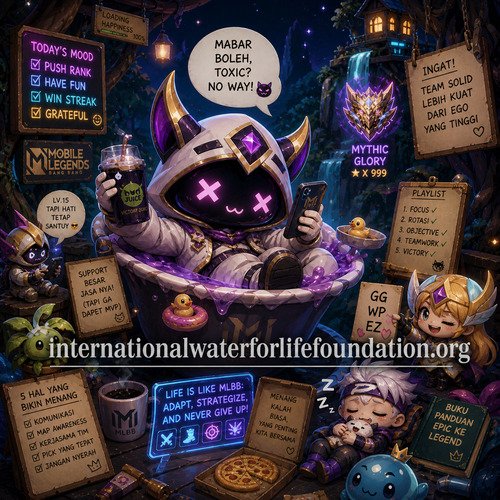
internationalwaterforlifefoundation.org – The mobile gaming industry has become one of the largest sectors in entertainment, and competitive titles now dominate much of that space. Among the most successful games in this category is Mobile Legends: Bang Bang, developed by Moonton. Its success comes from offering a complete multiplayer online battle arena experience in a mobile format, allowing players to enjoy strategic team-based gameplay in short but intense matches.
What makes the game especially interesting is the way it blends simplicity with depth. New players can quickly understand the controls, move their heroes, and use abilities within minutes. Yet true mastery requires much more than that. It involves understanding timing, team composition, objective control, and how to adapt to different opponents. This is why some players progress rapidly while others remain stuck despite spending many hours in the game.
The difference often lies in perspective. Casual players may see each match as a series of fights, while experienced players understand that every action should support a broader strategic goal. Pushing lanes, controlling objectives, and coordinating with teammates usually matter more than individual kill counts. This mindset is essential for long-term improvement.
Understanding the Strategic Foundations
Every match in Mobile Legends: Bang Bang takes place on a map with three lanes: top, middle, and bottom. These lanes are connected by jungle areas that contain neutral monsters. The final objective is to destroy the enemy crystal, but reaching it requires controlling multiple parts of the map.
The Gold lane is usually assigned to heroes who need significant item progression, especially Marksmen. This lane grants extra gold and helps those heroes become stronger faster. The EXP lane gives increased experience gain and is often occupied by Fighters who benefit from early level advantages.
The Mid lane is the strategic center. Because it connects both side lanes, heroes in this position can rotate quickly and influence multiple areas. Mages usually take this role because they can clear waves efficiently and provide strong support.
The jungle provides resources that are just as important as lane minions. Neutral monsters grant gold, experience, and buffs. Teams that control these camps efficiently often gain a strong advantage in both economy and tempo.
The Turtle and Lord are the two major objectives outside of towers. The Turtle provides early-game economic benefits, while the Lord becomes a powerful ally capable of pushing lanes. Securing these objectives often has a greater impact than winning isolated fights.
Hero Roles and Their Importance
Every hero belongs to a specific role that shapes their contribution.
Tanks are frontline protectors. Their job is to absorb damage, start team fights, and protect fragile allies.
Fighters are durable combatants who can deal damage while surviving longer than most heroes. They are often used in side lanes and can split push effectively.
Assassins focus on mobility and burst damage. Their goal is to eliminate vulnerable targets quickly.
Mages provide magical burst damage and crowd control. Their abilities are often essential during objective fights.
Marksmen are the main source of sustained late-game damage. They require careful farming and positioning but can decide matches once fully equipped.
Supports provide healing, shields, and utility. Their role is often underestimated, but they are crucial for team survival.
A balanced team composition usually has a much greater chance of success than one focused only on offensive heroes.
Match Phases and Priorities
Each match progresses through three stages. The early game focuses on farming, lane control, and securing the first Turtle. Players should avoid unnecessary risks and prioritize growth.
The mid game begins when rotations become more frequent and towers start falling. Team fights often revolve around objectives. The late game is highly punishing. Death timers are long, and one lost fight can end the match immediately.
Building Strong Personal Skills
One of the most effective ways to improve is to focus on a small hero pool. Constantly changing heroes makes it difficult to develop consistency.
By mastering a few heroes, players learn exact damage ranges, cooldown timing, and matchup strengths. This familiarity improves decision-making under pressure.
Choosing heroes that fit personal style also helps. Aggressive players often prefer Assassins or Fighters. Strategic players may enjoy Mages or Supports. Defensive players frequently excel as Tanks.
At the same time, learning multiple roles ensures flexibility during hero selection.
Farming and Resource Management
Gold is one of the most important hidden factors in the game. Heroes become stronger through items, and efficient farming is the main way to obtain them.
Strong players consistently clear waves, secure jungle camps, and participate in objectives. They avoid wasting time wandering without purpose.
Ignoring minion waves is a common mistake. Even a few missed waves can delay key items and reduce overall impact.
Item builds should also adapt to the enemy team. Defensive items may be essential against burst-heavy compositions, while anti-heal may counter regeneration-based heroes.
Positioning and Awareness
Positioning often determines whether a hero can contribute to a team fight.
Frontline heroes should engage first and create space. Backline heroes should remain protected and deal damage safely.
The minimap is critical. Checking it frequently helps players track enemy movement and avoid ambushes.
Overchasing is one of the most frequent errors. Pursuing a low-health enemy too far often leads to being trapped.
Rotations and Pressure
Rotations are central to advanced play. After clearing a lane, players should move to another area where they can create value.
A Mage can rotate from mid to side lanes. A Fighter can push a lane and then join an objective fight. These movements create temporary advantages.
Pressure means forcing enemies to respond. Split pushing is a common strategy where one player pushes a side lane while the rest of the team controls a major objective.
Communication and Coordination
Even in solo queue, communication matters. Pings can warn teammates, request assistance, or signal objectives.
Understanding teammate behavior is equally important. If the Tank moves aggressively, damage dealers should prepare to follow.
Mental resilience also plays a major role. Some matches begin poorly but are still recoverable. Players who stay calm often perform better.
Common Mistakes to Avoid
Overextending is one of the most common reasons players lose momentum. Chasing kills too deeply often results in death.
Ignoring objectives is another issue. Winning fights means little if towers and Lord are not secured afterward.
Poor map awareness leads to avoidable mistakes. Missing enemies often signal incoming danger.
Refusing to analyze personal mistakes prevents long-term growth.
Conclusion Mastering Teamplay and Strategy in Mobile Legends: Bang Bang for Consistent Wins
Mobile Legends: Bang Bang is much more than a simple mobile action game. It is a strategic team-based experience where awareness, teamwork, and smart decision-making matter just as much as mechanical skill.
Players who want to improve should focus first on mastering fundamentals. Learn a small hero pool, farm efficiently, and prioritize objectives over unnecessary fights. Once these habits become natural, advanced concepts such as rotations, split pushing, and coordinated team play become easier to apply.
The strongest players are not always the ones with the highest kill counts. They are often the ones who understand timing, map control, and how to create long-term advantages for the team.
In the end, Mobile Legends rewards players who understand the bigger strategic picture. Those who learn to think beyond individual fights will continue improving and enjoy the game much more deeply.