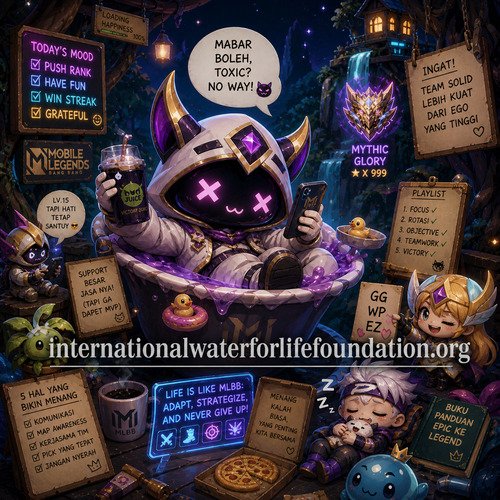
internationalwaterforlifefoundation.org – The mobile gaming industry has changed dramatically over the years, and among the games that shaped this transformation, Mobile Legends: Bang Bang remains one of the most recognized. It is not only a popular title but also a competitive platform where players learn to combine mechanical skill, strategic thinking, and communication. In many countries, especially across Southeast Asia, the game has become part of daily digital culture. It is played casually in homes and cafés, yet it is also followed seriously through professional esports competitions. This broad appeal comes from the fact that Mobile Legends is easy to start but challenging to truly master.
When someone first opens the game, the concept seems simple. Two teams of five players fight on the same map, each controlling one hero, with the goal of destroying the enemy crystal. The controls are responsive, and matches are designed to be short enough for mobile devices. For beginners, this creates an exciting first impression. However, after a few matches, it becomes clear that the game is much deeper than it appears. Players quickly realize that the strongest competitors are not always those with the fastest fingers, but those who understand timing, map pressure, and teamwork.
This is what keeps the game fresh. Even though the map remains constant, every match unfolds differently. Hero selections, item builds, lane assignments, and team decisions create endless variations. The game becomes a cycle of learning, adapting, and improving.
Understanding the Main Systems of Mobile Legends
The battlefield in Mobile Legends consists of three lanes. These lanes connect the bases of both teams and are defended by towers. To reach the enemy crystal, players must first destroy these towers and gain control of the map.
Between the lanes lies the jungle. This area contains neutral monsters that grant gold, experience, and buffs. Players who control the jungle often gain a major advantage because these resources accelerate hero growth.
Two important objectives also appear in the jungle. The Turtle grants an economic advantage in the early stages, while the Lord appears later and acts as a powerful ally capable of pushing lanes and forcing enemy defenses.
This means that Mobile Legends is not only about fighting. Eliminating opponents is useful, but the true goal is to use those opportunities to secure objectives and advance toward victory.
Hero Roles and Team Composition
Every hero in Mobile Legends is designed around a role: tank, fighter, assassin, mage, marksman, or support.
Tanks protect allies and absorb damage. Fighters are balanced heroes capable of dealing damage while surviving longer engagements. Assassins eliminate vulnerable targets quickly. Mages provide magical burst damage and crowd control. Marksmen deliver sustained ranged attacks and become stronger later in the game. Supports help the team through healing, shielding, and utility.
These roles work together as a system. A marksman may become the strongest damage source, but without protection, they can be defeated easily. A tank may initiate the perfect team fight, but if the team does not respond, the opportunity is wasted.
This makes team composition essential. Choosing heroes that complement each other often matters more than individual hero strength.
Match Stages and Timing
A Mobile Legends match usually develops through three phases: early game, mid game, and late game.
The early game focuses on farming. Players collect gold and experience while trying to control their lanes. This stage determines which heroes gain their first important items.
The mid game introduces rotations and team skirmishes. Teams begin contesting the Turtle and pushing outer towers. This stage often decides which team controls the pace of the match.
The late game is the most decisive phase. Heroes are fully equipped, and one team fight can determine the outcome. Death timers are long, and the Lord becomes the most important objective because it can help a team finish the game.
Understanding these phases allows players to adapt their strategy effectively.
How to Improve Your Gameplay
Farming is one of the most important aspects of Mobile Legends. It refers to collecting resources from minions, jungle camps, and objectives.
Many beginners focus too much on kills. While kills provide immediate rewards, they are not always the most reliable way to gain strength. A player who farms consistently often becomes much stronger than one who spends too much time chasing fights.
The Gold lane provides extra income and is usually assigned to marksmen. The EXP lane benefits heroes that need early levels, such as fighters.
Efficient farming builds the foundation for later success.
Rotations and Map Awareness
Rotations are one of the clearest signs of advanced play. Rotating means moving between lanes to support teammates, secure objectives, or pressure enemy towers.
A player who clears a wave quickly can rotate to another lane and create a temporary advantage. This often results in successful ambushes or objective captures.
The mini-map is essential for this process. It shows enemy positions and helps players predict danger.
Players who constantly check the mini-map can make proactive decisions. Those who ignore it often react too late.
Team Fights and Positioning
Team fights are often the moments that decide a match. These battles usually happen around Turtle, Lord, or key towers.
Winning a team fight requires coordination. Tanks initiate, mages control space, marksmen deal sustained damage, and assassins eliminate priority targets.
Positioning is critical. A damage dealer standing too close to the enemy may be eliminated instantly. A tank that engages too early may leave teammates unable to follow.
The best teams understand that after winning a team fight, they should immediately secure objectives. Towers or Lord are what transform a battle victory into real progress.
Frequent Updates and Meta Evolution
A major reason the game remains popular is the regular updates from Moonton. These updates introduce new heroes, adjust balance, and modify item systems.
This creates a constantly changing meta. Heroes that dominate one patch may become weaker in the next. Players who adapt quickly often gain an advantage.
The evolving meta keeps the game fresh for both new and experienced players.
Emotional Control
Mobile Legends is not only about mechanics. It also tests emotional resilience. Ranked matches can become stressful, especially when teammates make mistakes.
Players who become frustrated often make poor decisions. They may overextend, ignore objectives, or stop cooperating.
Calm players are more likely to identify comeback opportunities and continue making smart choices.
Teamwork as the Main Principle
At its core, Mobile Legends is a team-based game. Individual skill matters, but teamwork usually determines the final outcome.
A coordinated team can defeat individually stronger opponents through communication and shared objectives. Even simple pings can create strong cooperation.
These moments often become the most memorable. A comeback victory or a perfectly timed final push feels rewarding because it reflects collective effort.
Conclusion How Mobile Legends Teaches Strategy, Teamwork, and Fast Decision-Making
Mobile Legends: Bang Bang is far more than a casual mobile game. It is a strategic competitive experience where players learn to think, adapt, and cooperate.
To improve, players must understand the map, hero roles, farming, rotations, and team fights. Beyond technical mechanics, emotional discipline and communication are equally important.
This combination of accessibility and depth is why Mobile Legends continues to attract millions of players around the world. It is easy to begin but offers endless opportunities for mastery.
In the end, Mobile Legends is not simply about destroying the enemy crystal. It is about understanding strategy, making smart decisions under pressure, and working together toward victory.